O₂ tables
O₂ tables for breath-hold training on iPhone
An O₂ table keeps your rest the same and gradually lengthens your holds, working toward a longer maximum breath hold. Fathom: Freedive times each round and guides you through it.

Free to download · Fathom Pro from €2.99/month
What an O₂ table trains
O₂ tables focus on adapting to low oxygen. They use a fixed rest time with increasing hold durations, so each round asks a little more of you than the one before. Because the later holds are demanding, they are usually approached after you are comfortable with CO₂ tables and with guidance from a qualified instructor.
Everything in one training tab
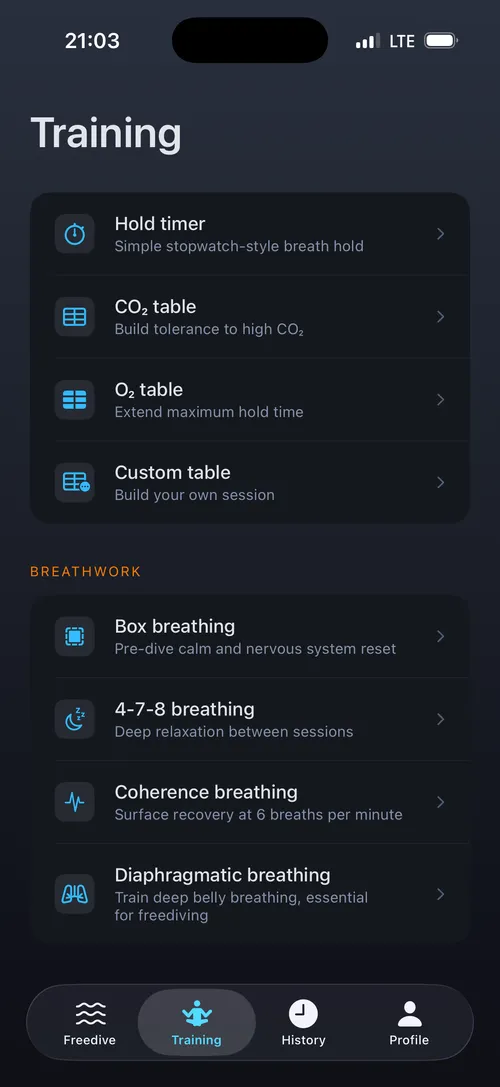
Fathom keeps your tools together: a simple hold timer, CO₂ tables, O₂ tables, custom tables and your breathwork sessions all sit in one Training tab, so you can pick the right session for the day.
Guided, so you can keep your eyes closed
Audio cues announce each phase, so you can concentrate on staying relaxed rather than watching the clock. Finished sessions are saved to your history.
Build your own with Pro
O₂ tables are included for free. With Fathom Pro you can create custom training tables and save them as presets to reuse.
Frequently asked questions
How does an O₂ table work?
An O₂ table uses a fixed rest time with increasing hold durations. The rests stay the same while each hold gets a little longer.
What is the difference between CO₂ and O₂ tables?
CO₂ tables keep the hold fixed and shorten the rests, building tolerance to CO₂. O₂ tables keep the rest fixed and lengthen the holds, working toward a longer maximum hold. Our guide explains both in more detail.
Do I need Fathom Pro for O₂ tables?
No. O₂ tables are included in the free version. Pro adds custom tables, saved presets and an unlimited dive log.
Related
Dive deeper.
Download Fathom: Freedive and start your first session today.
Free to download · Available on iPhone